How To Choose Between a Triangular Shade Sail and a Rectangle Shade Sail For Your Patio

Choosing the right shade sail shape can change how your entire patio feels. This guide breaks down what actually works in outdoor spaces.
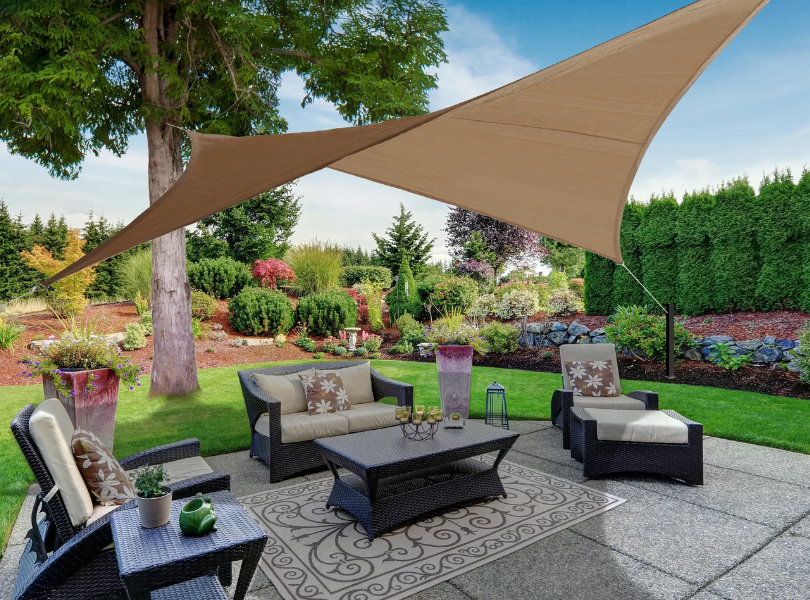
Patio shade sails look simple at first glance, but the shape you choose can completely change how your outdoor space functions. This guide explains how triangular and rectangular designs work in real, how to install them differently, and when traditional sizes stop working. You'll have a better idea of what really fits in your area by the end, instead of just guessing.
Why Patio Shade Sails Depend On Shape More Than Most People Expect
Most people initially think about the size or quality of the cloth, but form discreetly impacts everything from how much shade it lets in to how quickly water runs off. If you choose the wrong shape, it can let in too much sunshine or cause tension problems that show up in a few weeks.
One problem keeps coming up in research and conversations with users. People often put sails on their boats that appear good on paper but don't work when the wind blows or the anchor points aren't level. That usually has to do with the shape not matching up, not the quality of the material.
Coverstore makes both triangular and rectangular sails with breathable cloth and reinforced webbing. However, even sails that are well-made depend a lot on how their shape fits into your area. Shape isn't only how it looks. It has to do with structure.
When A Triangular Shade Sail Fits the Space Better
A triangular shade sail works best in places that aren't completely even. This design works better in corners, tight patios, and places with few mounting points because it can change shape more readily.
People on forums often talk about employing triangle layouts when they only have three strong anchor points to work with. A triangle naturally spreads strain over fewer points, so you don't have to force a rectangular design.
This form makes sense in several important situations:
- Small balconies or patios with few places to mount things.
- Areas that aren't particularly straight, so the edges don't line up.
- Layered shade designs that use more than one sail.
Another overlooked advantage is airflow. Because of its angled design, a triangular shade sail tends to allow better air movement, which helps reduce heat buildup underneath.
That said, coverage is more fragmented. You will often get partial shade rather than full protection, which is why some setups combine multiple triangles instead of relying on one.
When A Rectangle Shade Sail Creates Better Coverage
For bigger patios, a rectangular shade sail is often the best choice because it covers a larger area more evenly. This form is good for dining areas, poolside seats, and carports since it cuts down on gaps in the sun. When people want the same amount of shade all day, they go for rectangles. Planning is straightforward because the straight edges fit well with walls, fences, or posts.
This form is best when:
- You have four solid anchor points available.
- The space is evenly shaped, such as a deck or patio.
- Full shade coverage matters more than flexibility.
However, rectangular sails require more precision. Even small measurement errors can lead to sagging or uneven tension. Many users mention that their first installation attempt failed because they underestimated how exact the placement needs to be.
Products from Coverstore use lightweight yet durable fabric with reinforced webbing, which helps maintain tension over time. Still, structure matters more than material if alignment is off.
How Shade Sail Hardware Changes With Each Shape
The hardware on the shade sail is often what makes the difference between a sturdy setup and one that is sagging. Hardware affects how evenly the tension is spread and how safe the installation feels when it's windy or rainy.
Triangular layouts usually need fewer places to attach things. A basic kit normally comes with pad eyes, turnbuckles, and snap hooks that can be used in three different anchor positions. This makes installation a little easier, but it also requires more tension at each location.
Four anchor points are needed for rectangular installations, which makes the stress more even. This shape's hardware kits often come with extra anchors and parts to keep all the corners balanced.
A few important details often overlooked:
- To change the tension over time, you need turnbuckles.
- Parts made of stainless steel don't rust when they're outside.
- The strength of the anchor is more important than the number of hardware pieces.
Coverstore hardware kits follow this pattern by providing shape-specific setups, which makes assembly easier. Still, some installations may need extra support depending on how strong the walls are or how stable the posts are.
People commonly say that items are sagging when hardware is put in without proper tension or when anchor points move when they are heavy. The problem isn't with the product; it's with the way it was set up, which starts with planning the gear.
When Custom Outdoor Shades Make More Sense Than Standard Sizes
Standard sizes work well for common patio layouts, but many outdoor spaces do not follow perfect dimensions. That is where custom outdoor shades start to make more sense.
People often get annoyed when they buy a sail that almost fits. Even a slight difference can leave sections exposed or make tension angles that aren't right, which can make things less durable.
Custom sizing becomes valuable when:
- Anchor points are unevenly spaced.
- The patio has unique angles or extensions.
- You want precise coverage without layering multiple sails.
Coverstore offers both standard and custom options, which allow flexibility depending on layout complexity. Custom designs help eliminate the trial and error that often comes with standard sizing. Another useful feature is better water management. When a sail is the right size, it may be put up at the right angle so that water runs off instead of accumulating. Poor fit can cause water to build up, which adds stress over time.
Frequently Asked Questions
How Tight Should a Shade Sail Be Installed?
They don't give full shade; instead, they give partial shade. When covering larger areas, it's common to use several triangular sails together to fill in gaps and make a layered look.
Do Triangular Shade Sails Provide Enough Coverage?
They provide partial coverage rather than full shade. For larger areas, multiple triangular sails are often used together to fill gaps and create a layered design.
Can a Rectangle Shade Sail Handle Heavy Rain?
It can, but only if it is put in at an angle. Flat installations tend to hold water, which makes them heavier and puts more stress on them. Water will flow off naturally if the slope is right.
Is Special Hardware Needed for Different Shapes?
Yes, shape-specific kits make installation easier. Three anchor sets are needed for triangular sails, whereas four are needed for rectangular sails. Using the wrong settings can change how stable and tense things are.
How Do You Prevent Sagging Over Time?
All of these things are important: accurate measurements, robust anchor points, and gear that can be changed. A lot of people forget that they need to adjust the tension every so often, especially when the weather changes.
It's not so much about what you like when you choose between shapes as it is about how your space works in real life. Once a sail is placed, a well-matched one feels easy to use, but a mismatched one needs to be adjusted all the time.
Exploring solutions from Coverstore can help refine both design and installation decisions while avoiding common setup mistakes.
Before making a final purchase, people often find it worthwhile to check for available Coverstore Promo Codes to reduce overall cost.
Follow OutdoorHues for more practical insights on home and tech improvements.
Recent Blogs
-
Crown Shades Top Picks for Outdoor Canopies
-

How a Weighted Eye Mask for Sleeping Can Make Bedtime More Comfortable
-

Best Racing Simulators to Capture the Authentic Formula and GT Race Experience
-

Rugiet Recharge Benefits That Can Support Better Sleep
-
The Best Custom Gold Necklace Picks That Are Meaningful And Personal