Is Oupes Mega 1 Worth Choosing For Home Backup

Strong output and quick charging make Mega 1 Lite interesting for short outages. Its 1024Wh battery also sets clear limits worth knowing before purchase.
All featured products are selected by our editors and may include affiliate links. If you purchase through these links, we may earn a commission.
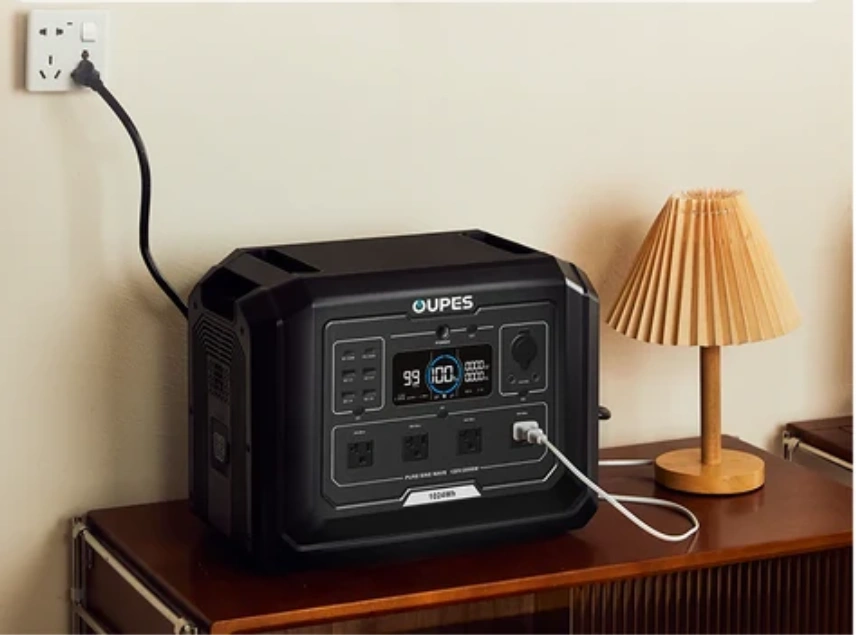
An Oupes Power Station can look surprisingly capable on paper when a blackout leaves a refrigerator, router, laptop, and other essentials competing for electricity. Mega 1 Lite combines 1024Wh of battery capacity with 2000W AC output in a 26.8-pound unit. Yet output alone does not determine useful backup time.
This review looks at where Mega 1 Lite makes sense, where its capacity becomes restrictive, and what real ownership discussions suggest before you rely on one at home.
Oupes Mega 1 Offers More Than Basic Emergency Power
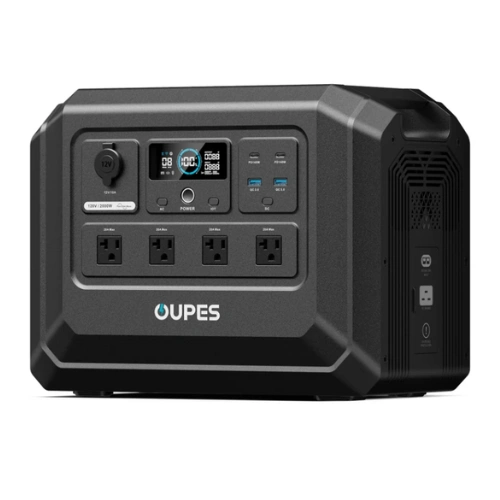
Mega 1 Lite sits in an interesting position. Its battery is modest enough to remain portable, while the 2000W pure sine wave inverter supports considerably more demanding equipment than basic charging devices. Oupes also specifies 4500W surge capability, nine outputs, pass-through charging, app control, and a transfer time below 20 milliseconds for UPS use.
Strong Output Makes More Household Appliances Practical
The 2000W continuous rating gives the unit ample headroom for many refrigerators, televisions, computers, networking devices and select kitchen equipment as long as each appliance is within rated requirements. Startup demand is important as well, especially with compressor-powered equipment. Checking both running wattage and startup demand before connecting an appliance is more useful than assuming every device below 2000W will behave identically.
That distinction makes an Oupes Mega 1 Review more useful when output and energy capacity are considered separately. A 1500W appliance may run within the inverter limit, yet operating it continuously would consume a 1024Wh battery quickly.
Mega 1 Lite Trades Expansion For Simplicity
One important detail deserves clarification because Mega 1 and Mega 1 Lite are easy to confuse. Standard Oupes Mega 1 supports additional batteries and can expand up to 5120Wh. Mega 1 Lite does not support that expansion system. Oupes positions the Lite version as a lighter standalone option for shorter backup periods and predictable energy needs.
That distinction makes the buying decision. The constant 1024Wh capacity may be a limiting factor for someone looking for more energy along the road. The simpler architecture can be a plus in case of rare outages, because you don’t have to spend money on an expanding system which might never be used.
Everyday Home Backup Reveals Where Mega 1 Works Best
Oupes Mega 1 Home Backup's best argument is selective power, not powering the whole house. Having the internet on, charging your phone, powering your laptop, having lights or having a fridge can make a short blackout a lot less annoying.
One easy way to prepare is to make a list of the gadgets in order of importance and how many watts they require before the power goes off. Reserve battery power for equipment that truly needs continuous electricity and then utilize high-draw gadgets in small bursts.
That technique goes a lot further than just plugging everything in, with 1024Wh and nine outputs.
Short Outages Suit The Available Capacity Best
Oupes’ own comparison material puts useful runtime at about 80 percent of nominal capacity. Based on those calculations, a compact fridge (100W) is projected to last about eight hours and a 60W laptop has a lifespan of about 13 hours.
Actual results can differ due to appliance cycling, inverter losses, temperature variations and other changes in power demand.
This is where a Potable Power Station with substantial inverter output can create misleading expectations if watt-hours are overlooked. Mega 1 Lite can handle demanding equipment, but 1024Wh should be treated as an energy budget. A quick calculation of essential loads before purchase gives a much clearer picture of suitability.
Portability Makes One Unit Useful In More Places
At 26.8 pounds, Mega 1 Lite can move between a home office, living area, garage, vehicle, or campsite without becoming a permanent installation. Four AC outlets, two USB A ports, two 140W USB-C ports, and a 12V car outlet also reduce the need for separate adapters.
That mobility can come in handy during disruptions. Rather than having to run extension cords from room to room, the unit can be placed near whichever equipment the user needs to work with at any one time. With IP21 protection, it is still considered indoor equipment and should be properly protected from water and harsh exposure.
Fast Charging Makes The Battery Easier To Reuse
Oupes states that Mega 1 Lite can recharge in 46 minutes through its 1400W AC input. Solar input reaches 800W, while combined AC and solar input can reach 2200W. Car charging provides another option when wall power is unavailable.
And those numbers matter since part of the usefulness of the backup is about recovery time. A battery that can be recharged by a short re-application of grid power may again be useful during the same outage cycle.
Important Limitations
Capacity remains the main compromise. One owner discussing Oupes Mega 1 on Reddit said the unit handled regular continuous use and sustained 2000W output, but also noted that 1kWh can disappear quickly. That experience reinforces the difference between being able to power an appliance and being able to power it for a long time.
Reliability feedback is less uniform. Another Reddit thread has some people reporting abnormally low charging input on specific systems and others reporting normal charging. They don't set a failure rate, but make warranty coverage and support worth considering, rather than judging the product from specs alone.
Oupes lists LiFePO4 cells rated for more than 3500 cycles to 80 percent capacity and provides a five-year warranty, with another year available after registration.
Oupes Mega 1 Makes More Sense For Certain Power Needs
Mega 1 Lite makes the strongest case for people who want compact emergency power for selected essentials and value fast recharging over large fixed capacity. Someone expecting multi-day whole home coverage should calculate energy requirements carefully because 1024Wh can become the limiting factor long before the 2000W inverter reaches its limit.
FAQs
Can Mega 1 Lite Run A Refrigerator?
Yes, as long as the refrigerator meets output and startup requirements. The first thing to do is to check the appliance wattage. Run duration is very variable depending on how often the compressor kicks in and real consumption.
Can Mega 1 Lite Work As A UPS?
Oupes lists UPS switching at 20 milliseconds and supports pass-through charging. Sensitive or critical equipment should still be checked against its own power requirements before relying on any backup source.
Can Extra Batteries Be Added Later?
No. Mega 1 Lite is a fixed capacity model. Standard Mega 1 supports expansion, which is an important distinction for anyone planning longer backup periods.
For short outages, mobile work, essential electronics, and carefully managed household loads, OUPES Mega 1 Lite offers a practical balance of power, portability, and rapid recharging. Its biggest strength is handling substantial loads without becoming excessively heavy, while the fixed 1024Wh capacity remains the main limitation to consider.
Follow OutdoorHues for more practical technology reviews and useful product guidance.
Recent Blogs
-
Is Oupes Mega 1 Worth Choosing For Home Backup
-
Vatrer Power LiFePO4 Batteries Review 2024: Are They Worth It?
-

Zenni Optical Review 2026: Are These Cheap Glasses Actually Worth It?
-
Everything To Know About The Silk And Snow Organic Mattress
-
KittySpout Hydration Health Bundle: A Better Way to Keep Your Cat Hydrated